

Taiwan may not have much to learn from Singapore in getting its citizens to embrace legal casinos
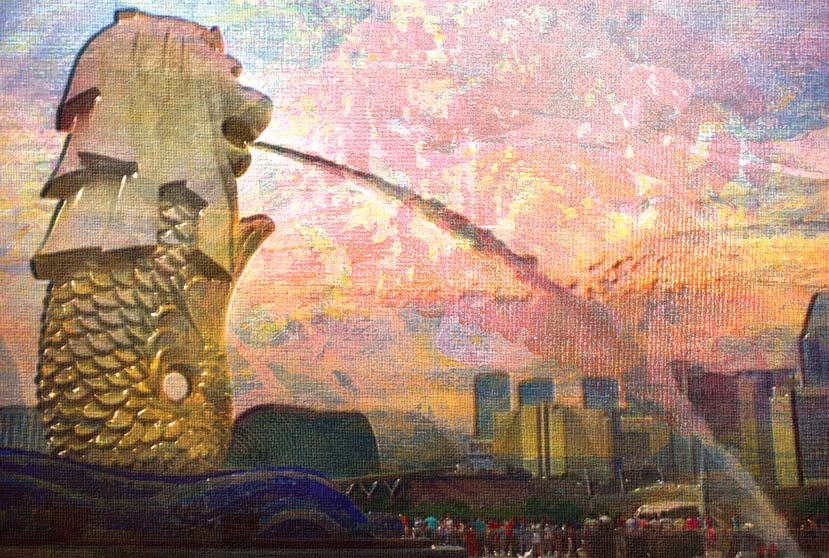
Last month, King Pu-tsung, the secretary-general of Taiwan’s ruling Kuomintang (KMT) party, undertook a three-day trip to Singapore to study the Lion City’s measures to mitigate the negative social impacts of the recently opened casinos.
“We do not know whether Taiwan’s casino plans will be accepted by the public… but we could first learn from Singapore’s efforts to prevent the negative social fallout,” said Mr King, a close aide of President Ma Ying-jeou.
In January 2009, Taiwan’s parliament voted through a controversial bill lifting a decades-old ban on casinos. While the main island of Taiwan remains off limits, casinos can now be developed on Taiwan’s offshore islands, though the law stipulates that residents of the respective islands need to approve any proposed casinos in referenda.
Taiwan may not be able to learn much about winning public support for casinos from Singapore, where the casino issue was not put to a referendum. Despite the widespread perception that the famously-efficient Singapore government managed a better PR job on its casino initiative than Taiwan’s leaders have managed thus far, the anti-casino lobby in the Lion City remains vocal, and as discussed in the preceding story, ‘Stormy Weather,’ Singaporeans seem to be increasingly questioning the benefit to the community of the two integrated resort (IR) projects. Even though Singaporeans had been gambling away billions every year at casinos in neighbouring jurisdictions prior to the arrival of Marina Bay Sands and Resorts World Sentosa, it is far from clear that locals would permit the IRs to remain if the issue were put to a referendum tomorrow.
The nays have it
The Penghu islands were initially viewed as the front-runner in the race to host Taiwan’s first casino. On 26th September 2009, around 30,000 Penghu residents cast votes in a referendum on a proposal to develop two casino resorts there, and 56% of them voted ‘no.’
Penghu casino advocates claim a major reason for the ‘no’ vote was the central government’s failure to come up with detailed measures to counteract local concerns about the potential social ills created by the casinos. At least three years must pass before Penghu can hold another casino referendum.
Admittedly, the Penghu pitch could have been much better. In Singapore, the government clearly spelled out the anticipated tourism, employment and GDP boosting benefits of the IRs well before construction began. The Singapore government also outlined specific measures to deal with any social problems that might arise, such as an increase in problem gambling. By contrast, no such detailed forecasts and measures were presented to Penghu residents.
One Taiwanese provincial official who spoke off the record said: “The average person does not know what the casinos will be like. In Singapore, the prime minister explained very clearly why the country has to have casinos and the impact. There are clear laws. But in Taiwan, there’s still a large degree of uncertainty.”
The focus of Taiwan’s casino aspirations is now on Kinmen. The latter is considered a good site because its islands are nearer to Xiamen in Southeastern China than to the main island of Taiwan, and therefore seen as a good location to target visitors from mainland China.
A group in Kinmen submitted a referendum application in August 2009. Approval of the referendum appears to have been held back, and in the meantime, the pro-casino lobby, including Mr King et al, have been working on an improved pitch to get locals on side.
Still, even providing clear details and forecasts may have little effect in swinging the tide of public opinion in Kinmen, since at its heart, the casino issue is a moral and emotional one. Even in the absence of legal casinos, Taiwanese are avid gamblers and get their fix at electronic gaming arcades that the authorities turn a blind eye to. It will just prove much harder to ask Taiwanese to formally condone gaming. Mr King revealed that the latest polls showed most Taiwanese were still averse to embracing legal casinos on their soil.
State of play
Taiwan currently has around 3,000 electronic game arcades offering quasi-gaming, in a similar fashion to Japan’s pachinko industry. Taiwan’s Electronic Game Arcade Business Regulation Act provides for two categories of arcade: i) Generate rate, which provide entertainment-focused games to the public, including minors, and ii) Restricted rate, which are off limits to people under eighteen years of age, where quasi-gaming is understood to take place. Pachinko remains popular in Taiwan—a legacy of the Japanese occupation in the early 1900s—but the country’s restricted rate arcades have come to be dominated by slots and multi-player machines offering baccarat, sic bo and roulette. Bingo also still enjoys a strong following in Taiwan, particularly among the older generation.
The table on the right shows the distribution of Taiwan’s quasi-gaming arcades as at end-December 2008 (latest available figures).
Prior to the arrival of the IRs in Singapore, there was a small but thriving slot club market in the city-state. The slot halls were legally sanctioned as gaming venues, and appropriately regulated. By contrast, the legal grey-area under which the restricted rate arcade market operates has probably not helped the public perception of gaming in Taiwan.
Despite their less-than-ideal operating environment, Taiwan’s restricted rate arcades are estimated to generate over US$5 billion annually. That suggests plenty of pent-up local demand for legal gaming to support an ambitious casino venture, even if, as many fear, mainland China blocks its citizens from playing at Taiwan’s proposed casinos. After all, in its special administrative region of Macau, mainland China already has an officially-sanctioned outlet for all its citizens’ pent-up casino gambling demand. The casino developments in Taiwan could also hardly hope to compete with those in Macau, where billions of dollars have been invested since the liberalisation of the industry in 2002 to create a string of dazzling casino resorts.
An honest pitch?
The Singapore government trumpeted the IRs as a way to boost tourism, resulting in a widespread misconception among locals that the bulk of the casinos’ winnings would derive from foreigners. It is now clear—as most industry watchers had predicted—that residents of the affluent city-state will contribute the biggest chunk of revenues, despite the onerous S$100 a day or S$2,000 a year casino entry fee levied on them.
RelatedPosts

-120x86.jpg)
It is unlikely the canny Singapore government believed its citizens would be kept out by the entry fee, which was more likely designed to make the introduction of the IRs more palatable to locals, while contributing to state coffers. The determination of the fee level no doubt included consideration of the opportunity cost—a Singaporean intent on gambling is more likely to fork out S$100 for the convenience of gambling at one of the local casinos than to be subject to the sailing schedules of the casino cruise ships operating out of the city or having to make the trek to the closest land-based alternative at Genting in Malaysia.
Unless it wishes to undertake a shameless attempt to mislead its public, the Taiwan government will have to admit the bulk of demand at its proposed casinos would be generated by locals. The government can then furnish estimates of how much money its citizens lose in casinos abroad, and outline how revenues raised from taxing domestic casinos would be used to support community causes. Notably, the Singapore government’s failure to do this is now partly fuelling anti-casino sentiment, since 100% of the proceeds of Singapore’s slot club market—which has been dealt a heavy blow by the IRs—continues to be used to fund social and welfare projects.
Such an honest approach to presenting the case for legal casinos in Taiwan may very well fail to surmount ingrained prejudices, particularly since a major part of the resistance in the offshore islands appears to stem from a ‘not-in-mybackyard’ mentality, rather than economic or even moral considerations. An honest approach will, however, likely lead to less public discontent following the opening of the casinos than is currently emerging in Singapore, where many citizens may feel they had been duped by a pitch which hinted locals would be a rare sight on the IR gaming floors.