
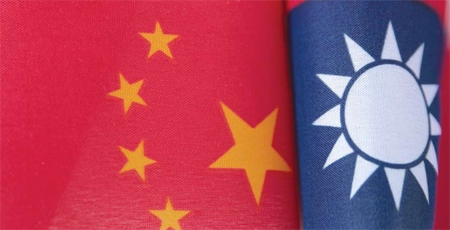

As in Macau, casino success in Matsu ultimately depends on Beijing
On 7th July, residents of the offshore Taiwan island chain of Matsu took part in a historic referendum, assenting in principal to the construction of Taiwan’s first casino on the archipelago. Although a milestone, the victory was far from compelling. In fact, of the near 10,000-strong population, only 1,795 people voted in favour whilst 1,341 voted against the motion. A swing of 228 people would have made the difference. Despite the slim margin, the result has paved the way for a casino on Matsu—possibly two—with the government of Taiwan now considering a draft bill that would formally legalize gaming. The problem for interested developers, however, is that Matsu’s location on the doorstep of China comes with high political risk and its infrastructure is wholly inadequate. Infrastructure and Administrative Bottlenecks The area’s two feeder airports, Beigan and Nangan, are tiny—amounting to 166,000 seats to Taipei annually, while the lack of basic resources is apparent. It costs NT$80(US$2.66) per tonne to supply fresh water to Matsu compared with the national average of NT$11 per tonne, and the same dynamic applies to electricity. Local residents receive a government subsidy on these resources, but a casino would probably have to pay full price. Supplying a major resort’s needs would also require a significant investment in boosting the supply chain. Add to that a tiny land mass (covering 25 square km) and population—not to mention the need to minimize the social and environmental impact of development on a sleepy community—and Matsu’s only real asset for a would-be integrated resort operator is arguably its new legal status.
Fortunately, the pro-gaming lobby should be able to rely on government support. The administration has been intent on legalizing gaming ever since it passed the Offshore Islands Development Act in 2009, allowing casinos to be built on Taiwan’s outlying islands pending local referenda. It’s therefore highly likely that Taiwan will introduce gaming in one location or another in the next decade, and that plays into Matsu’s hands as the first mover. In fact, Grant Govertsen, partner and analyst at Union Gaming Research Macau, thinks there’s a high chance that gaming will take root on Matsu. “I’m an outsider but it feels like there’s support in the legislature to implement the necessary regulatory bill,” he says. “I think it should come to fruition, but in terms of timing it’s a five-year or more story from now.”
Weidner Resorts has tabled a NT$60 billion (US$2 billion) bid to develop a casino resort on Matsu. The proposal is based on a complete overhaul of Matsu’s infrastructure (as will be any pitch with serious intent) such as investing NT$12 billion to upgrade the airport from its current 2C classification to 3C. Bill Weidner himself said in a press conference on 9th July, “I don’t see any problems that cannot be solved by modern technology,” and he’s right. Matsu’s infrastructure can be fixed, but the challenges are numerous.
To tackle the task, the Taiwanese administration itself needs a re-think, as Davis Fong, director of the Institute for the Study of Commercial Gaming at the University of Macau, points out. “There are several legal elements for the Taiwanese government to think about,” he explains. “But first of all they need to set up a specific department to regulate the rules of the gaming industry.” The problem, according to Mr Fong, is that to regulate the new industry the executive needs to introduce a new layer of government specifically designed for the purpose.
As it stands, the Ministry of Transportation and Communication has taken the reins, but it is imperative the Taiwan government centralizes expertise in one body. The Executive Yuan spokesman, Hu Yu-wei, accidentally hit on the problem last month (July) when he said the Financial Supervisory Commission was best placed to regulate gaming odds, while the Public Construction Commission should oversee the building process along with the Construction and Planning Agency. His comments suggest that the necessary expertise is currently diluted across government rather than managed vertically down, and that’s before the government has even begun to formulate policies on local residents’ rights to gamble, junkets, tax rates and so on. The formation of a casino regulatory body could be a first step towards addressing the long list of issues the government needs to address.
The administrative and infrastructure issues can be addressed with planning and investment, but there is a deeper problem— and that’s Matsu’s geographic location. Owing to the island chain’s location 10 miles from China and 110 miles from the main island of Taiwan, the success of any casino on Matsu will depend on Chinese rather than Taiwanese gamblers. Even if the archipelago’s transportation links are brought up to scratch, the difference in travel time between Taipei and Macau compared with Taipei and Matsu will be negligible: roughly half an hour. The bottom line is that it won’t be Taiwanese gamblers filling Matsu’s coffers, and that will push the fortunes of any casino out of Taiwanese control.
Beijing’s Blessing Required
“As far as I’m concerned, the success of a casino—whether it’s in Matsu, Jinmen or Penghu (other outlying islands)—will be 100% related to how Beijing views it”, admits Mr Govertsen. If the 37 million residents of Fujian (the nearest Chinese province) are given unfettered access to Matsu, then a casino resort there will be an unqualified success. The chances of that, however, are slim.
Taiwan needs some kind of consent from Beijing to allow its citizens to visit any planned resort on Matsu before it even begins the project, but Beijing obviously will not simply sign a document promising a certain number of visitors per year. On top of that, Beijing will be able to use visitor numbers as a bargaining chip with Taiwan. Essentially, it’s in Beijing’s best interests to support the project in its infancy, because if it comes to fruition, Beijing will have de facto control over its revenues and be able to use that as leverage in cross-straits diplomacy.
Beijing has a historically hostile relationship with Taiwan, one built on decades of military strategising, aggressive diplomacy and now economic incentivisation to re-unite Taiwan with the Mainland. Despite relations between Taiwan and the Mainland having thawed in recent years, the upshot is that it’s almost inconceivable that Beijing won’t use visitor numbers to lean on Taiwan—the Chinese agenda precludes that—and Mr Govertsen says you don’t need to look very hard to see these kinds of forces at work. “We’ve had instances in Macau over the last couple of years where Beijing decides, perhaps after somebody ticked someone off, that they would teach somebody a lesson by imposing restrictions”, he explains. “And I think that will be even more likely in a political environment like Taiwan’s which is considered renegade.”
Beyond the political tête-à-tête between the two sides, Matsu is also a vital military outpost, which in its heyday was home to over 50,000 Taiwanese soldiers. Today, that number stands at a little more than 3,000, but sitting on the shoulder of China’s east coast, there’s no denying Matsu’s strategic importance. Critically, according to Mr Fong, the archipelago’s military bearing affects the scale of any potential development. “Matsu is a very important strategic location so I don’t think they will develop very large scale properties,” he explained. “If there were a lot of investment, the political risk would be very high. If I were an investor I’d prefer to invest small scale because nobody knows what will happen in the future.” Add to that China’s inclination to push its citizens to gamble in Macau rather than Taiwan, and Matsu seems destined to fall or prosper according to the whims of Beijing.
China’s influence won’t be limited to controlling visitor numbers either. Assuming the Taiwanese government legalizes gaming and opens the bidding process for Matsu, Beijing will dictate how truly open that process is. “The operators who know the market best are already based in Macau”, explains Mr Govertsen. “But they’ve got to tread very lightly in Taiwan lest they anger someone in Beijing who could then make their life very difficult in Macau.” Essentially, if Beijing doesn’t want Macau-based operators expanding to Taiwan, they will pressure them to abstain from the bidding process.
Such a scenario would open up the field to casino operators lacking representation in Macau. Mr Govertsen suggests companies such as Genting and Caesars would form an orderly queue behind Weidner Resorts, and the nature of the bidding process could prove decisive. “If the legislature says the government of Matsu gets to make the decision then that might very well help Weidner, given the leg work the company’s already put in,” he said. “If, on the other hand, the process is run out of Taipei then it would be more of an open race. But as I said, in that case you could also end up in a position where none of the six Macau guys feel welcome, based on pressure that might be put on them by Beijing. That would obviously be great for Weidner.”
Small Bite Out of the Pie
Whichever company wins, Matsu’s direct impact on regional competitors is likely to be small. The archipelago will have one or two resorts tied to Fujian visitors with Weidner Resorts predicting annual gaming revenues of NT$10 billion (US$330 million) from its proposed casino. Macau will barely feel the arrival of gaming on Matsu (and certainly not for another five years) because gamers from Fujian constitute only 2% and 5% of Individual Visit Scheme and group visitors from China to Macau, respectively. Also, only 7.6% of visitors to Macau came from Taiwan in the second quarter of this year, and it’s unlikely that Matsu will ever present a more attractive destination for Taiwanese high-rollers than Macau does.
Where Matsu is likely to make a difference, however, is informally: namely to the perception of gaming in Asia. “Let’s assume it comes to fruition and the Chinese are allowed to gamble there”, says Mr Govertsen. “It would be another notch in the Asian gaming belt that just shows how big the pie really is. It will emphasize how lightly penetrated the Chinese/Asian market is, and it could—quite frankly—put pressure at the margins in places like Japan to join the industry sooner rather than later.”
Matsu has a strong chance of welcoming Taiwan’s first casino in the next five plus years (and if not, somewhere else in Taiwan will). The island chain lies in a tricky position economically, geographically and politically. Even if the Taiwan government and the eventual bid-winner manage to overcome the localized problems, the success of any integrated resort development on Matsu will ultimately depend on Beijing. That, in turn, will be influenced by China’s evolving relationship with Taiwan.
RelatedPosts