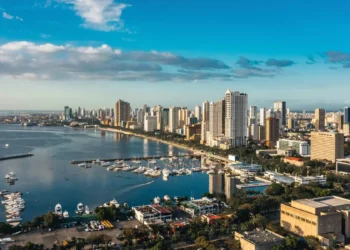



The Philippines tourism outlook is expected to improve from 2026 onwards, strengthened by three key drivers including economic growth, infrastructure improvements and the targeted easing of visa requirements, according to Maybank Securities.
The update follows a worrying decline in tourist numbers this year, with foreign visitor arrivals down 3.0% between January and November on a significant drop in arrivals from the key markets of South Korea and China.
In a note, Maybank’s Ronalyn Joyce Lalimo stated that, while Philippines GDP is forecast to grow by 4.9% next year and 5.2% in 2027, the key inflection point for improved visitation will center around easing capacity constraints with major airport upgrades underway at Manila’s Ninoy Aquino International Airport (NAIA), New Manila International Airport (NMIA) and regional hubs.
“Capacity constraints are finally easing, with 2026 marking the start of a multi-year lift,” Lalimo said. “NAIA’s rehabilitation is already improving throughput, but we only expect to see a sharp rise in arrivals from 35 million toward 62 million passengers beyond 2026. NMIA construction will also start in 2026. Regional hubs (Cebu-Mactan, Iloilo, Bohol-Panglao and Davao) are also expanding capacity to support growth outside Manila.
“While full benefits arrive beyond 2026, the staged rollout will pre-emptively help airlines add routes and frequencies, supporting faster growth in visitor arrivals (nearing 2019’s 8 million) and lifting international arrival share back above its current 91% of 2019 levels.”
Policy support should also aid tourism recovery, the analyst explained – particularly the government’s e-Visa program which has since September been expanded to cover a total of 12 countries including South Korea and Singapore. The program allows for those planning to enter the Philippines for tourism or business purposes to apply online for stays of up to 59 days.
Maybank said the program eases access for key markets, adding that airlines are already responding to such initiatives by expanding routes.
“Despite weak arrivals [in FY25 year-to-date], we expect tourism’s GDP share to remain above 2024’s 8.9% and trend toward the 9%-range,” Lalimo said. “We maintain a positive view on the sector.”
RelatedPosts