
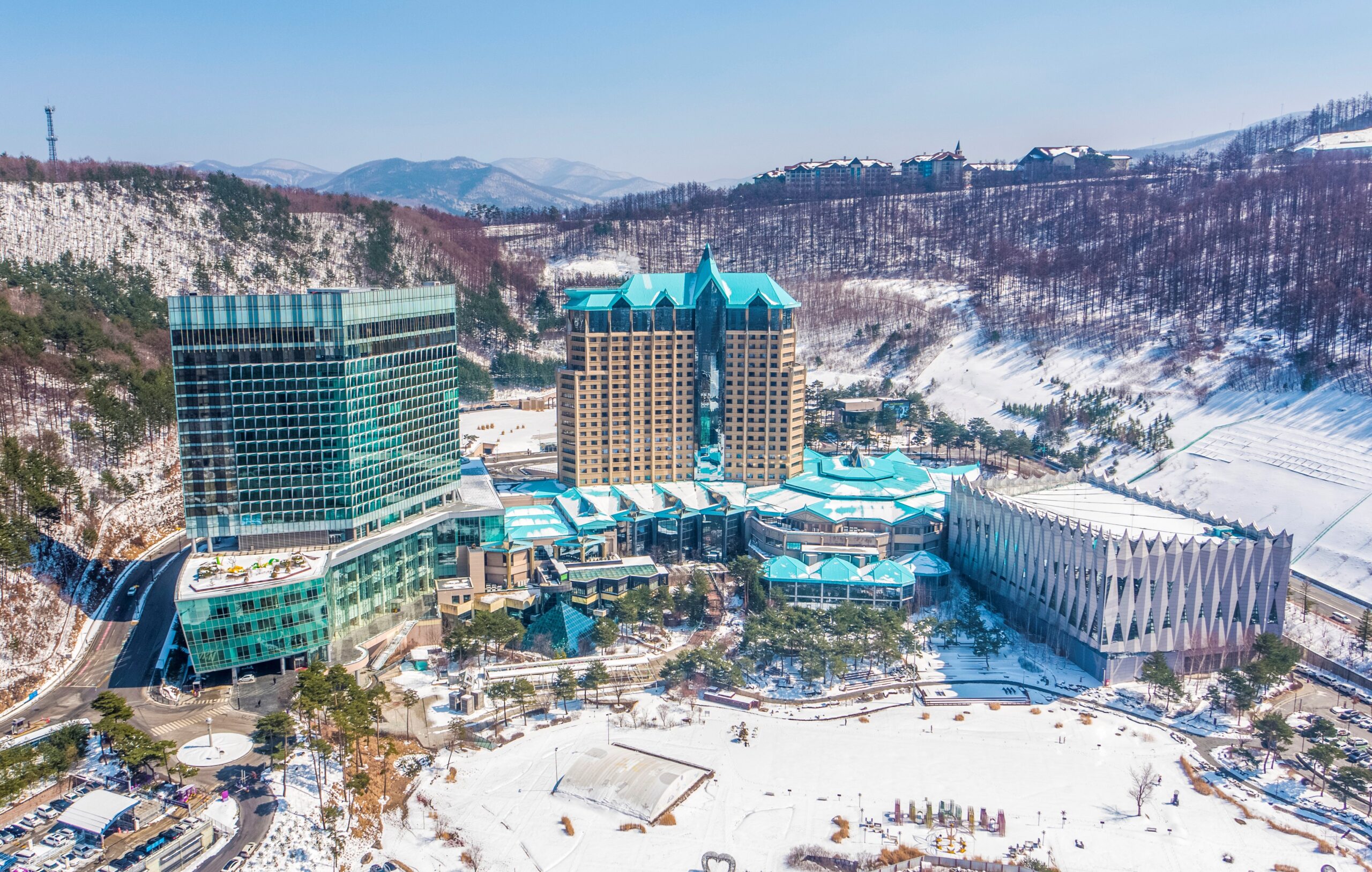

Kangwon Land’s KRW3 trillion (US$1.9 billion) transformation project is aimed at doubling the ratio of non-gaming revenue generated at the casino-resort annually from 20% to 40% by providing greater incentive to increase length of stay.
Specifically, the only casino in Korea at which locals are permitted to gamble is targeting an “alternative stay resort” model in which visitors make use of the property’s accommodations more frequently rather than what it calls the current “enter-play-exit” model, according to comments from head of public relations Kim Young-ho to local media outlet The Korea Post.
Kangwon Land announced in April 2024 its ambitious expansion plan, which will include a new luxury casino, a hotel and additional leisure facilities such as a wellness center, walking trails, outdoor activities and more.
Kim told The Korea Post that the substantial investment was necessary to improve Kangwon Land’s attractiveness and implement a more sustainable long-term business model in the face of rising regional competition in the integrated resort space.
“If the current structure is maintained, Kangwon Land will remain the same 10 years from now. Large-scale investments are inevitable to create a sustainable foundation in a volatile industry,” Kim told the media outlet.
“Although the initial investment burden is large, we designed it so that it is not unreasonable in the long run, considering depreciation costs and borrowing plans. It is more dangerous in the long run to keep only dividends [to shareholders] and not [invest in] the structure.”
Kim explained that upgrading existing facilities and expanding hotel and leisure facilities would comprise the first stage of investment. By connecting hotel facilities to leisure, wellness and sports facilities it is hoped that both the length of stay and the ADR (average daily rate) can substantially increase.
Under the plan, known as “K-HIT”, Kangwon Land aims to double its annual visitors to 13 million and sales to KRW3.5 trillion (US$2.38 billion), Kim said, while also doubling the proportion of non-gaming sales from 20% currently to 40%.
“This goal was derived on the premise of a structural transformation, not a book calculation,” he explained. “The key is the expansion of the non-casino sector.”
According to Kim, completion of what it calls the Grand Core Zone of the resort will see the main consumption area expand from the casino to the exterior areas, with the installation of a cable car system seen transforming the way people move around the property.
The operator aims to better leverage its leisure facilities, such as water parks and waterfalls in the summer, ski resort in the winter and trekking in spring and autumn while adding new facilities like a theme park and “pet village”.
On expansion of gaming space, Kim said, “The larger the scale, the stronger the safety devices. The addiction prevention center and monitoring system are already the best in the industry, but we will expand them in line with the size of the project.”
Kangwon Land’s casino space is projected to grow from 14,513 square meters currently to 20,261 square meters as part of the expansion, while the total number of gaming tables would increase from 200 to 250 and gaming machines from 1,560 to 1,860.
RelatedPosts