

[A previous version of this story featured a headline highlighting the ratio of gaming to non-gaming revenues at Wynn Al Marjan. Following editorial review, IAG determined that key information required to calculate an industry-standard ratio was not available, creating the potential for a misleading impression. The headline has therefore been updated to focus solely on information that is unambiguous and not open to differing interpretations.]
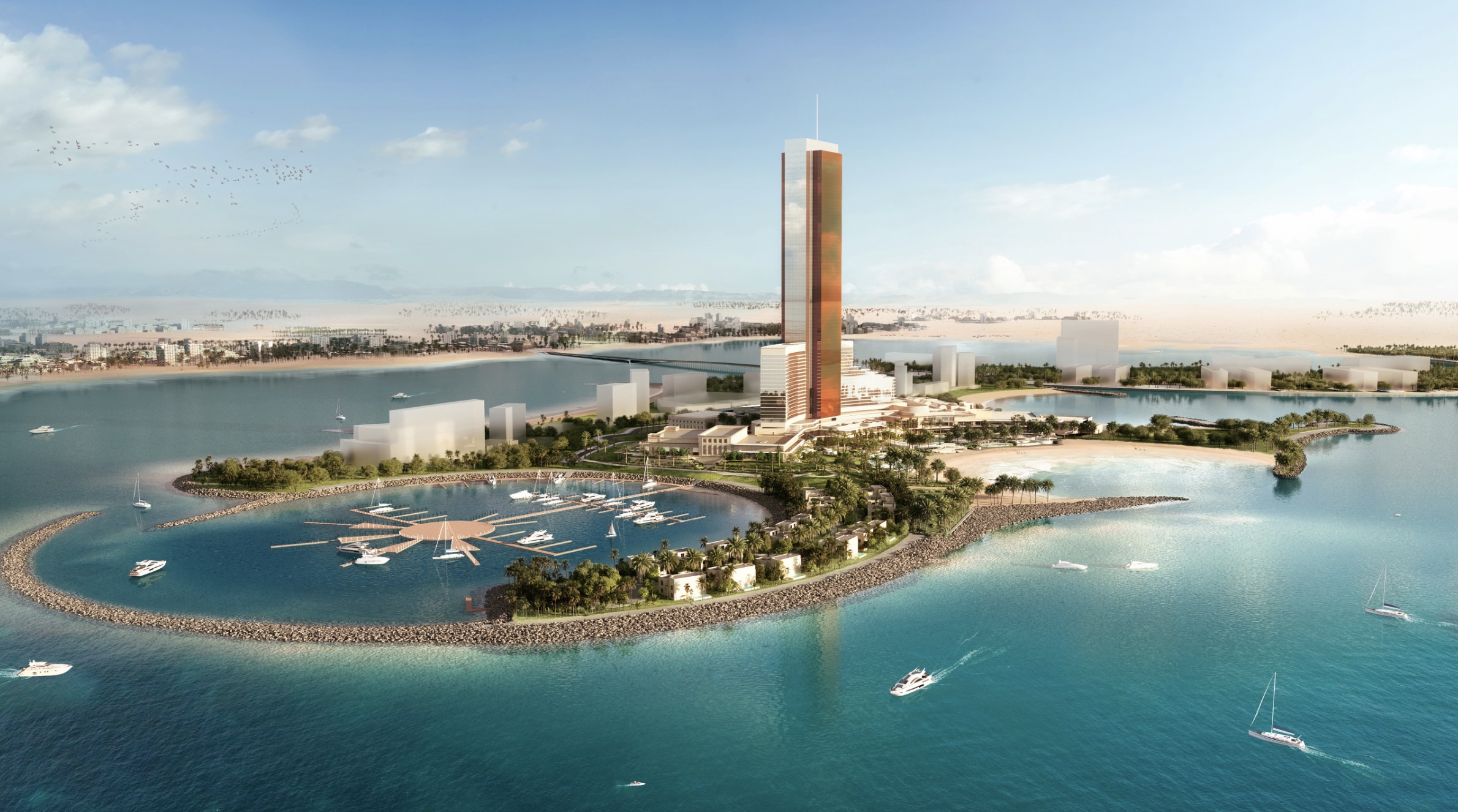
Gaming revenues at Wynn’s US$5.1 billion UAE integrated resort development could reach as much as US$1.66 billion annually, according to information contained in an investor presentation released overnight. The company has also flagged total visitation days of visitors to Ras Al Khaimah at 3.5 days – 17% longer than the average length of stay seen in the US gaming hub of Las Vegas.
The latest investor presentation coincided with an Analyst and Investor UAE Market Tour this week, which included a visit to the Wynn Al Marjan Island site.
According to financial information contained within the presentation, gross gaming revenue at the IR is forecast to reach at least US$1 billion annually in a low case scenario up to US$1.66 billion as the high case. The base case has GGR coming in at US$1.33 billion. Net property revenue, after reducing GGR for player incentives and adding in non-gaming revenue, is forecast at a low of US$1.38 billion and a high of US$1.88 billion.
Adjusted Property EBITDA is expected to come in at between US$390 million and US$570 million annually once Wynn’s management fees of between US$110 million and US$230 million are taken into account.
 Likewise, project ROI is forecast to reach between 9.8% and 15.7% while Wynn’s return on equity would be 16.7% as a low case to as high as 34.3%.
In a scenario where the UAE boasts three integrated resorts, Wynn said it forecasts 0.04% penetration rate into the 2.4 billion people located within a four-hour flight although annual trips for those guests is estimated at 2.8 to 3.2 trips – higher by far than both Macau (1.5 to 2.5) and the Las Vegas Strip (1.5 to 2.0). Average length of stay is stated as 1.2 days – a low base that is in line with Macau but below Las Vegas – although the company has total visitation days to the broader city of Ras Al Khaimah at 3.5 days.
Development progression
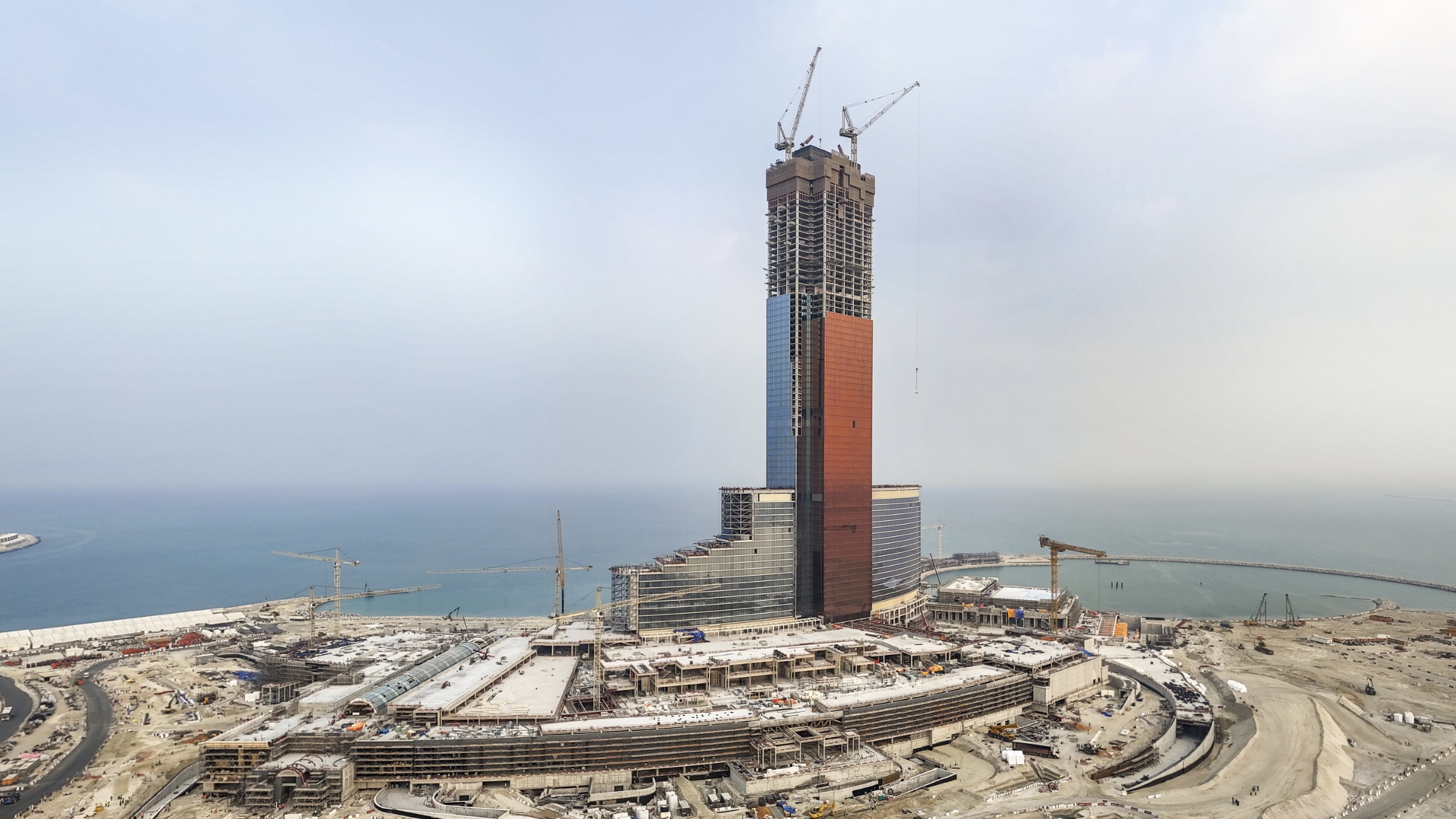
Wynn also provided an update on development progress in its presentation, which includes confirmation that topping out is imminent and tower structural concrete complete. On track for an early 2027 opening, Wynn said it has also completed 100% of the structure for guest accommodations with 100% of hotel room fit-outs underway. Lowrise concrete and steel structures are 97% complete and 70% of tower exterior façade glazing complete.
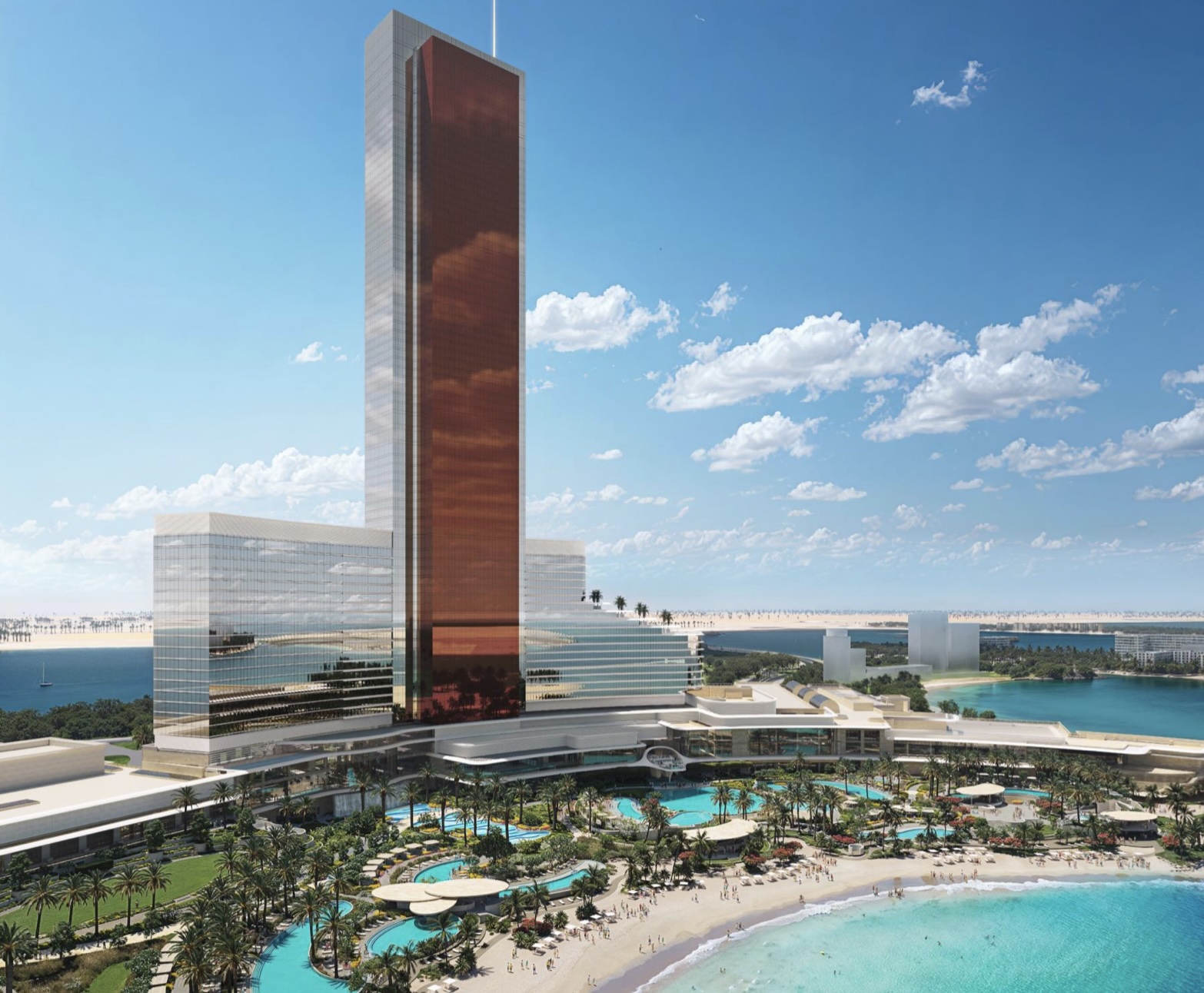
Once operational, Wynn Al Marjan Island will boast 1,530 rooms and suites, 22 restaurants and lounges, a theater, nightclub and five-star spa, plus a casino with 275 tables and over 2,000 gaming machines.
 Low supply, high demand, innovative transportation
Wynn noted that demand for hotel rooms in Ras Al Khaimah will continue to outstrip supply in the years ahead, even with the number of hotel rooms expected to more than double between now and 2030.
A study by Colliers International and Marjan expects hotel keys in the city to rise from around 7,472 currently to 16,229 in 2030, however demand is forecast at 22,498 by 2030, leaving a daily rooms deficit of 6,269. In 2027, when Wynn Al Marjan Island opens, demand will exceed hotel room supply by 8,434.
The company said it expects annual visitation to Ras Al Khaimah to grow from 1.3 million in 2024 to 5.3 million in 2030 and total overnight guests to rise from 4.5 million to 9.6 million – boosted by substantial infrastructure investment such as the US$200 million expansion of the E111, cutting travel time between Dubai and Ras Al Khaimah by 45%. Likewise, the expansion of the terminal at Ras Al Khaimah International Airport will see annual passenger capacity reach 3 million by 2028.
Notably, electric air taxi services between Dubai and Wynn Al Marjan Island are slated to begin by opening time in early 2027, described as the UAE’s first “vertical take-off and landing” air taxi ecosystem. This, Wynn said, will cut travel time from Dubai to just 15 minutes.

RelatedPosts